Henry Rollinson

Home page

Appears as:

Born:

Parents:

Unit:


No.:

Rank:

Died:

Grave/Memorial: 
Rollinson, H

1886, Brentwood, Essex

Alexander and Charlotte (née Hockley)

1st Battalion, East Surrey Regiment

L.8090

Private (Lance Corporal)

4 April 1915, Belgium, age 28

Named on Ypres (Menin Gate) Memorial, Ypres, Belgium: Panel 34
      

Biography:
Henry Rollinson was born, in Brentwood, Essex, in 1886. He was the son and eldest child of Alexander, an agricultural labourer & stockman, and
Charlotte (née Hockley). He had three brothers and six sisters.

Soon after Henry was born, his parents moved to Great Bookham in Surrey. They moved a lot; Henry’s first six siblings were born in Great Bookham,
East Clandon, Shepperton, Ripley and Malden, before his parents settled in Woking in about 1901.

When he left school, Henry worked as an agricultural labourer.

Henry joined the Army, with the East Surrey Regiment, on 30 December 1903. He enlisted for three years and nine years as a reserve. He stood 5 feet 5½
inches tall and weighed 121 pounds. His complexion was described as ‘fresh’; he had brown hair and brown eyes.

On 7 May 1904, Henry extended his service from 3 to 8 years, his character being described as ‘Very good’. On 23 May 1904, Henry was charged with
‘being in Woking with no pass’ (he was based at Aldershot) and ‘being absent from 1.15pm until 3pm’. In July he was charged with desertion and loss of
kit and sentenced to 56 days suspension of leave. He was assigned to 1st Battalion in October 1904 and then, in January 1905, to 2nd Battalion, which
was in India.

Henry seems to have enjoyed army life in India. He was awarded a Good Conduct Badge in November 1906; he was awarded special pay in November
1906, December 1908 and March 1909. He passed for rank of Corporal in October 1908, being promoted to Lance Corporal on the 24th of the month.

In March 1909, Henry lost his stripe for ‘using obscene language to an N.C.O.’. In April, he was charged with ‘Committing a civil offence’ – assaulting a
local – and sentenced to 7 days detention. In June, he was charged with being absent from Roll Call, being drunk and using obscene language to an
N.C.O.; he was sentenced to 14 days confined to barracks. In January 1910 he was confined to barracks for 8 days for ‘having vermin in his bed cot’. In
August, he was charged with ‘being drunk on Standing Camp Road’, using obscene language and violently resisting his escort; he was fined 2/6 and
sentenced to 168 hours [7 days] detention. Henry was transferred to the Army Reserve on 29 October 1910.
The 3rd (Reserve) and 4th (Extra Reserve) Battalions remained in England with the dual role of home defence and of training and preparing reinforcement drafts of reservists, special
reservists, recruits and returning wounded for the regular battalions.

Henry then became a carman for a coal merchant. In October 1911, he married Mary Florence Richardson and they had a son and a daughter.

When war broke out, Henry was mobilised on 5 August 1914 and posted to 3rd Battalion , The East Surrey Regiment on 19 August. He was transferred to
1st Battalion on 19 September. The battalion then took part in the battle the Aisne. In 1915, after the Battle of La Bassée, the 1st East Surreys withstood a
most determined attack on Hill 60, near Ypres.

Henry Rollinson was killed on 4 April 1915. His final resting place is unknown; his name, along with others of his regiment, appears on panel 34 of the
Menin Gate Memorial, Ypres, Belgium.

Henry’s brother, William Harold Rollinson, is also commemorated on both the Menin Gate Memorial and the St John’s Memorial.


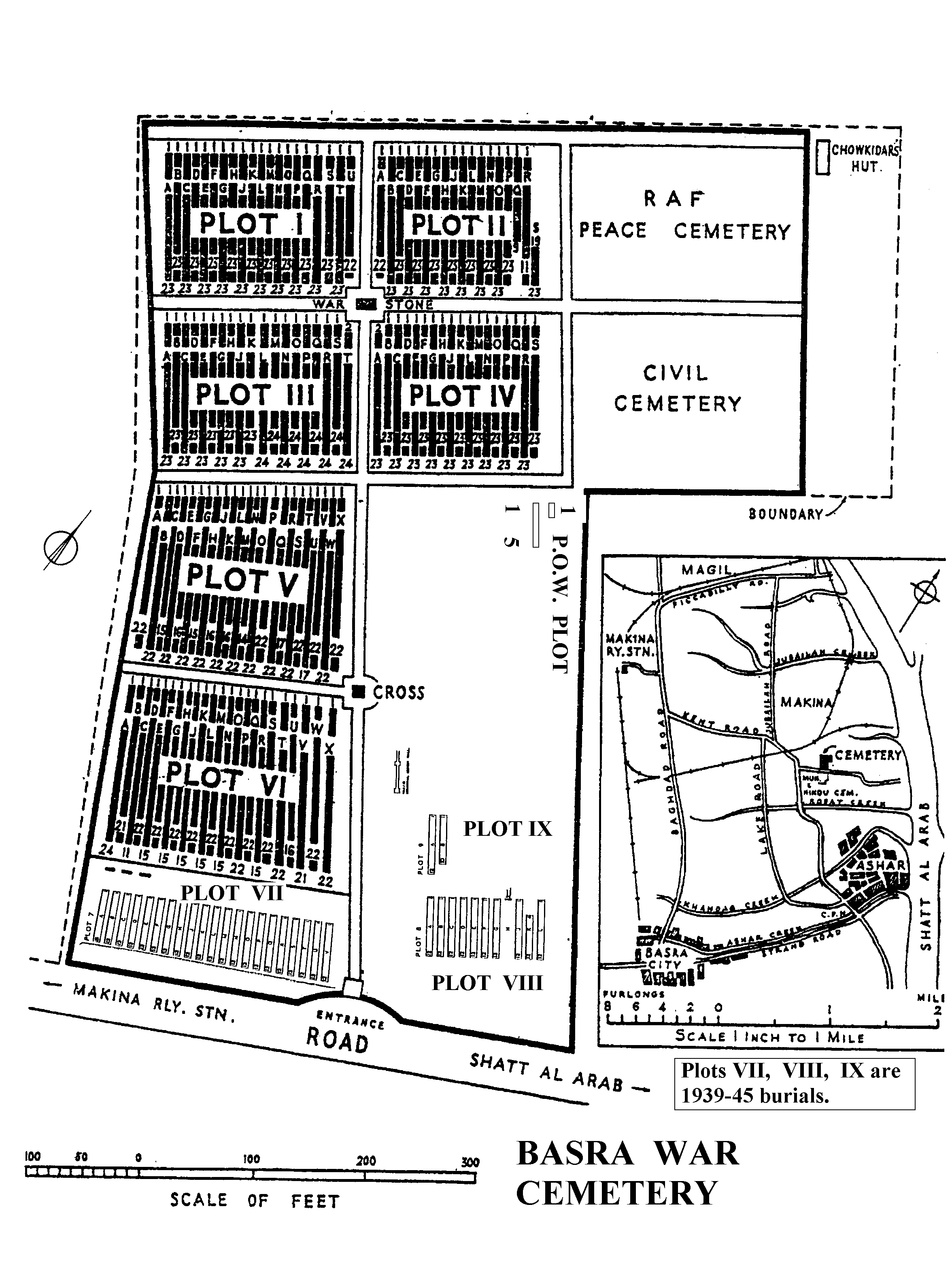
During the First World War, Basra was occupied by the 6th (Poona) Division in November 1914, from which date the town became the base of the Mesopotamian Expeditionary Force.
A number of cemeteries were used by the MEF in and around Basra; Makina Masus Old Cemetery was used from December 1914 to October 1916 and the Makina Masus New
Extension was begun alongside the old cemetery in August 1917. These two sites formed the basis of the war cemetery.

The cemetery now contains 2,560 burials of the First World War, of which 76 are unidentified and 10 are non-commonwealth casualties (mostly Russian refugees). In addition, 6
casualties whose graves could not be found during the reburial phase were commemorated on special memorial headstones.

However, in 1935 it was decided to remove all the headstones as the salty soil had caused them to substantially deteriorate. Instead, all the Commonwealth casualties were
commemorated on a Memorial Screen Wall which was built in the same year.

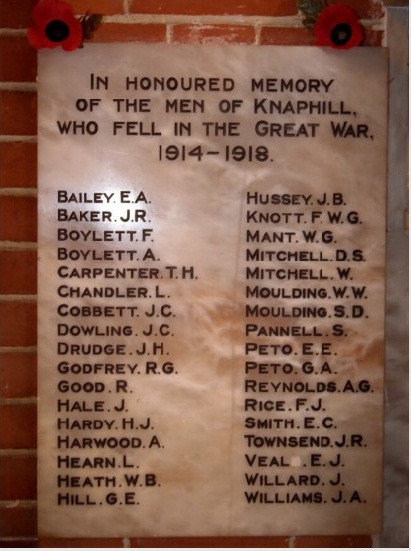
Frederick is also commemorated on the memorial tablet within Knaphill Holy Trinity Church.